


Safe and secure on the water: Learn these seven basic knots
Discover the basic knots that every water sports enthusiast should know in our latest blog! You’ll learn about the figure-eight knot, read on quickly.
When sailing, whether you are an experienced captain or just starting out, learning some basic knots is very important. Knots not only help secure your boat but also manage sails, secure lines, and ensure general safety on the water. Here are a few essential knots you should know and how to tie them.
The Figure-Eight Knot:
This is useful for securing the end of a line so it doesn’t slip away. You make it by creating a loop and threading the end of the line through it and wrapping it around the other side before sliding it back through the loop.
The Bowline Knot:
This knot is handy for securing a line to a post or railing. Lay the line over the object, make a knot like an ‘X’, and pull the end under the loop.
The Double Figure-Eight Knot:
This is a stopper knot to prevent a line from slipping through a hole. It resembles the figure-eight knot but has an extra loop that goes through the line.
The Cleat Hitch:
This knot is used to secure a line to a cleat or post. Wrap the line around the object, make two half-hitches, and pull them tight.
The Anchor Bend:
This is useful for securing a line to an anchor or heavy object. Make a loop and place the end over it. Tuck the end through the loop and pull it under the loop.
Practice makes perfect
Practice these knots well before heading out on the water. Mistakes can lead to unsafe situations or damage to equipment. Remember that the knots should be tight but not too tight. Practicing makes you better and more confident as a sailor.
The Single and Double Bowline:
This knot is used to create a loop at the end of a line. This is useful for attaching a line to a sail, for example. Make a loop, tuck the end through it, around the line, and then back through the loop.
The Flat Knot:
This knot joins two lines of the same thickness. It’s good for making a longer line. Ensure the lines run parallel and make two knots like an ‘X’.
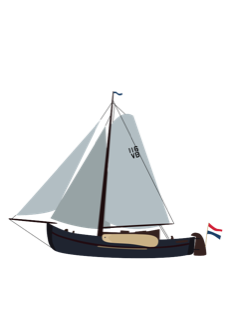
Book your sailing holiday on a flat-bottomed boat now!
The importance of knots through the years
The importance of knots in the world of sailing dates back far in history. Centuries ago, knots were essential for sailors and skippers to navigate their ships, secure cargo, and ensure safety on the open sea. But how have these knots evolved from the time of wooden ships to the modern water sports practices of today?
In the past, when sailing ships were the only means of transport over large bodies of water, knots were vital. Sailors used intricate knot techniques to hoist, trim, and secure the enormous sails. Each knot had a specific purpose, whether it was to control the sails in strong winds, secure cargo, or tie ropes on the deck.
The well-known “sailor’s knot” such as the figure-eight knot and the bowline were everyday tools for the crew. But special knots like the clove hitch were also used to provide extra grip when handling wet and slippery ropes. It was a true art to be able to tie these knots efficiently.
Today, in the world of modern water sports, knots remain an essential part of every water sports enthusiast’s equipment. Although technology has advanced tremendously and boats now have sophisticated systems, basic knots are still vital. Water sports enthusiasts still need to know how to secure ropes, trim lines, and tie boats safely.
Fortunately, we now have access to extensive information resources and can learn knot techniques quickly and easily. There are countless guides, videos, and online platforms that help water sports enthusiasts learn the right knots for their activities. Whether you are a sailor, kayaker, canoer, or motorboat lover, the basics of knots remain universal and indispensable.
So, while we enjoy modern water sports with advanced boats and equipment, it is still valuable to recognize how knots have helped us navigate safely and successfully on the water throughout the ages. The knots of the past have adapted to the needs of today, and mastering these basic skills still helps us facilitate our water sports adventures and boost our confidence.
On this page
Read also
5 Reasons to Rent a Sloop with Varen met Sil for Your Next Vacation in Friesland
Tips for boating with a sloop, motorboat, or flat-bottomed boat